Four Cities, One Escape

Finnegan Flynn
| 17-09-2026
 · Travel Team
A new style of European travel is replacing the traditional one-city break with four-stop journeys designed around short connections, affordable stays and dense cultural experiences.
The strongest routes keep individual travel legs below five hours, making it realistic to combine several countries in a single week. Central Europe dominates thanks to compact distances, strong transport links and relatively good value.
Berlin, Prague, Vienna And Budapest
The strongest all-round route begins in Berlin before moving through Prague and Vienna to Budapest. It scored 28.8 out of 40 for its balance of nightlife, culture, accommodation and affordability. Berlin offers museum and energetic evenings, while Prague adds Gothic streets, Charles Bridge and a more budget-friendly atmosphere. Vienna brings imperial architecture, traditional coffee houses and major museums, before Budapest finishes the trip with thermal baths, ruin bars and dramatic Danube views.
The transport costs can remain surprisingly manageable. Current bus fares start at about €14.48 from Berlin to Prague, €14.48 from Prague to Vienna and €12.48 from Vienna to Budapest when low fares are available.
A Cheaper Route Through Bratislava
Replacing Vienna with Bratislava creates one of the most economical combinations: Berlin, Prague, Bratislava and Budapest. Bratislava is around four hours from Prague and compact enough to explore during a short stay. Its hilltop castle, cobbled Old Town and small cafe make it an easy addition without the higher accommodation and dining costs associated with some larger capitals. Budapest is less than three hours away, keeping the itinerary efficient.
For this route, a practical daily budget of around €70–110 per person should cover a hostel or simple hotel, casual meals, local transport and modest sightseeing.
Poland Adds Better Value
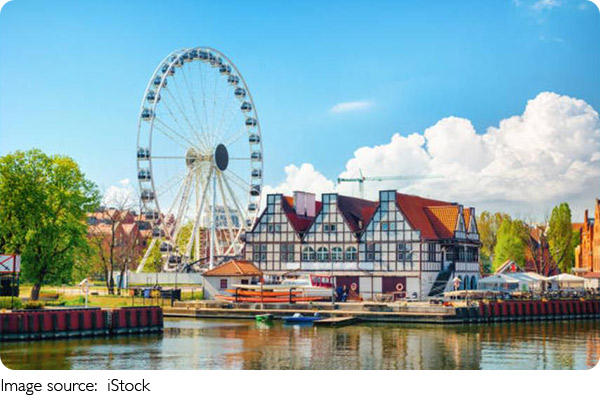
Berlin, Prague, Wrocław and Kraków is particularly appealing for travellers who want to minimise transport time. The three intercity journeys total about 11.7 hours.
Wrocław is spread across islands connected by more than 100 bridges and combines a striking market square with Cathedral Island and its famous bronze gnome trail. Kraków adds one of Europe’s best-preserved historic centres, centred on Rynek Główny, while Auschwitz-Birkenau can be visited on a day trip from the city.
This route works especially well for budget travellers, with roughly €60–100 per day providing a realistic target for accommodation, food and basic activities.
Poland
When To Plan The Trip
Late spring and early autumn are ideal for this style of journey. May, June, September and early October usually offer comfortable walking weather without the heaviest summer crowds.
Seven to ten days is enough for most four-city routes, allowing roughly two nights in each destination. Travelling with light luggage makes frequent transfers easier, while booking intercity tickets and central accommodation early can keep the overall budget under control.
Trip-maxxing works best when the route itself is simple. By choosing neighbouring cities rather than collecting distant capitals, travellers can spend less time moving and more time actually experiencing Europe.